Category Archives: Uncategorized

“Underland” new paintings by Sarah Emerson

Whitespace artist, Sarah Emerson, sure has been busy! Not only is the opening reception for her current show at whitespace tonight from 7-10 pm but she was recently interviewed on Burnaway’s ARTSpeak Radio , is featured in this month’s Jezebel magazine and has been selected by world renowned art critic, David Hickey, for the 18th Annual Texas National Competition and Exhibition taking place at SFA Galleries in Nacogdoches, Texas April 14 thru May 26.

“Underland” new paintings by Sarah Emerson

Sarah Emerson’s paintings present viewers with highly stylized versions of nature by taking patterns already visible in the natural world and painting them in pastel hues and pop, paint by number repetition. Inspired by themes ranging from battlefields, war propaganda, literature, and idyllic gardens, she uses the landscape for impression, abstraction, symbolism, and sentiment. Emerson manipulates scale and spatial relationships, twisting her subjects into flat emblems and shifting planes.  The result is often visually enchanting compositions that combine candy-like colors with macabre narratives that leave the viewer with a sense of both wonder and melancholy.
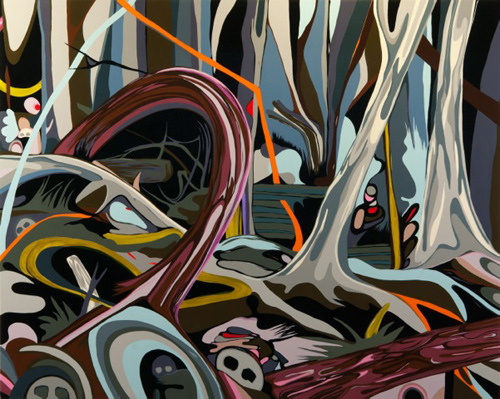
"Darkness Falls" by Sarah Emerson

"Darkness Falls," acrylic and rhinestones on canvas, 48 x 60"


For Underland, Emerson’s second solo exhibition at whitespace gallery, she focuses on creating a series of underworld reflections of the natural landscape.  Each painting depicts a fantastical analogical study of an actual place combined with the myths and remnants of the real events associated with that location.  Once on canvas the place is removed from reality; it becomes an image reflection or vague memory filtered, abstracted, and compressed into geometric shapes.  For Emerson, the artificial underworld in her paintings becomes a story of its own, an apocryphal place mimicking and appropriating a reality of paradise and innocence lost.  Each painting is a parallel plane with repeating symbols and “memento mori” motifs dressed up to camouflage a gaping darkness lurking beneath the surface.

Sarah Emerson graduated from the Atlanta College of Art and went on to complete a Master’s Degree at Goldsmiths College in London, England. Over the last twelve years she has exhibited her paintings in galleries throughout the United States, Canada, and Europe, including White Columns in New York, Cosmic Gallery in Paris, and Real Art Ways in Connecticut.  Her paintings were featured on the cover of New American Paintings in 2003 and 2007; and her current work will be included in the upcoming Southern edition of New American Paintings 2012.  In 2010, Emerson exhibited her work in “Catastrophe,” the Quebec City Biennial curated by Sylvie Fortin.  Other recent projects include murals for the Atlanta Contemporary Art Center’s Day Job: Georgia group show and the City of Atlanta Office of Cultural Affairs’ Elevate/Art Above Underground Atlanta public art project.    Her work was also included in Atlanta Art Now’s inaugural publication, Noplaceness: Art in a Post-Urban Landscape.

“Underland” will run from April 5 – May 12, 2012

whitespace gallery hours: Wed – Sat | 11 am – 5 pm or by appointment

814 Edgewood Avenue | Atlanta GA 30307 | Tel: 404.688.1892
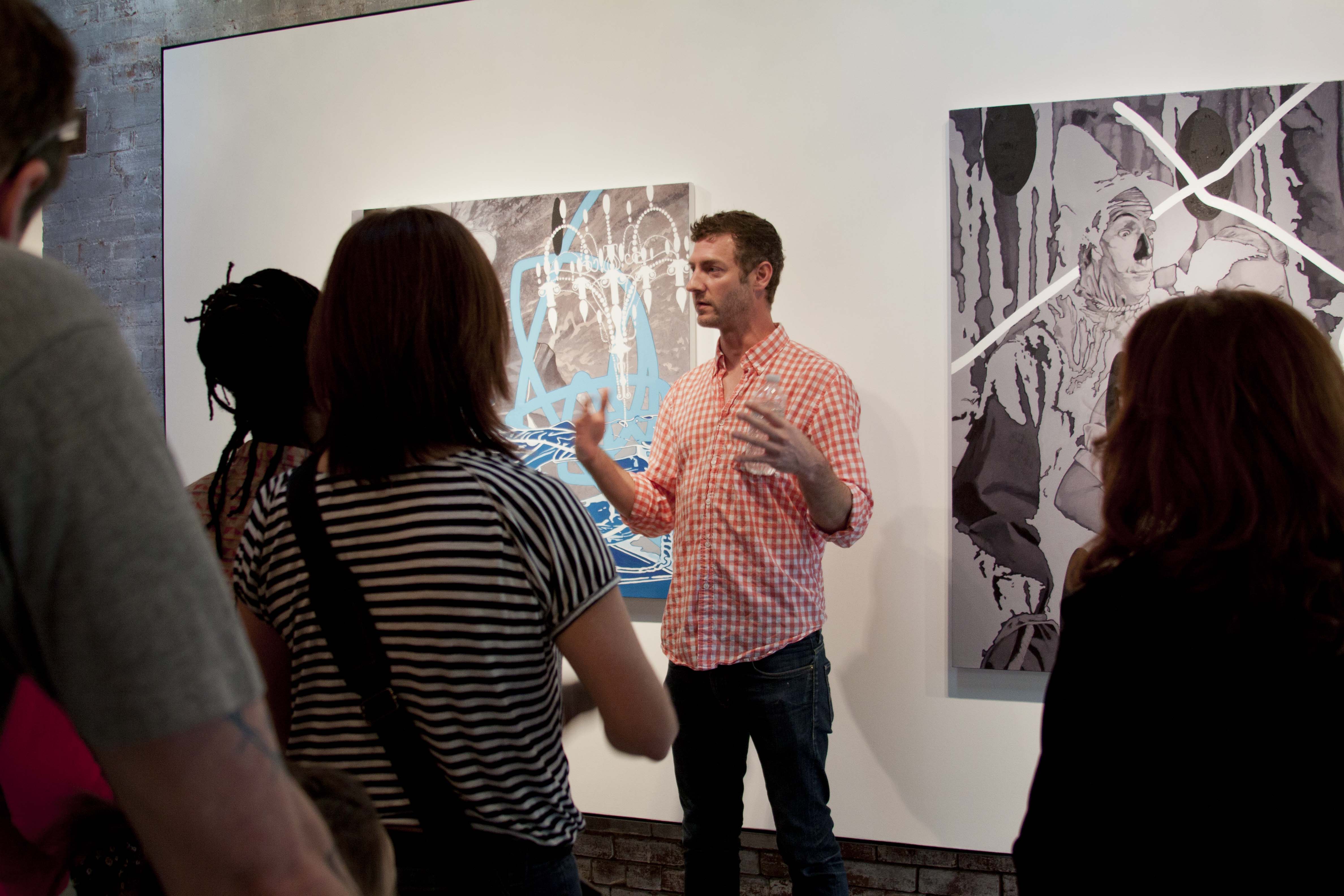


Artist conversation with Tommy Taylor at whitespace gallery

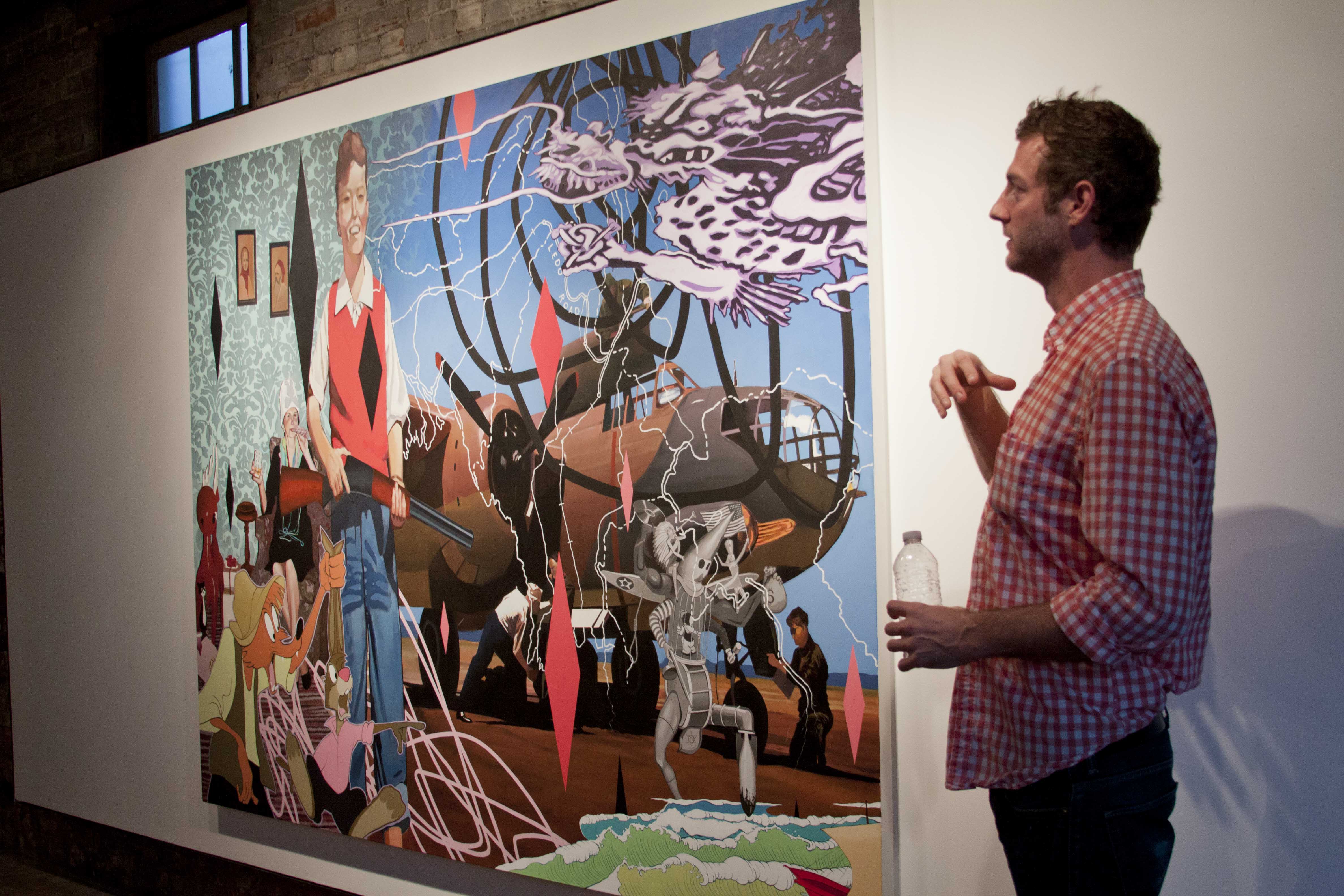
Guests gathered at whitespace on Wednesday evening for a conversation with artist, Tommy Taylor. Taylor’s recent show Some Sort of Solitude was inspired by a trip he took through the North Carolina mountains and the book, A Short History of Myth. Taylor began thinking about more instinctual parts that form our experiences and attempted to paint the unexplainable. Throughout the work, Taylor depicts images from his childhood, a time when things seemed much grander, and calls the paintings “visual puzzles”. Painting through the eyes of an inner-child, Taylor explores ideas of heroes and what it means to be a man.

Popeye and Bluto appear in two of his paintings. Taylor thinks of Popeye as an exemplary of a hero and shows Popeye and Bluto as one figure, a Yin and Yang of sorts.

"Ledo Road" features multiple images that symbolize members of the artist's family. The seated woman is a representation of Taylor's aunt whom he remembers telling stories of Brer Rabbit, depicted in the left hand corner. The young boy, or the artist's great uncle, was a war-time pilot. Ledo Road, the only road accessible to soldiers, was used as a supply route. The painting also depicts an image from German propaganda conveying the country's dark past.


Curator and whitespace artist, John Otte’s current show in New Orleans is called "the most thoughtfully curated show of video art in the city’s history"

Check out the article by Wesley Stokes of Pelican Bomb.
“Constant Abrasive Irritation Produces the Pearl: A Disease of the Oyster” runs through January 29 in New Orleans
John Otte was also interviewed by Burnaway in this video, Prospect2, which is about Prospect New Orleans, one of the leading biennials of international contemporary art in the United States.

Joey Orr of ArtsCriticATL.com reviews Benita Carr’s "Morning Sun" running at whitespace through February 18, 2012

Review: Photos and videos in Benita Carr’s “Morning Sun,” at Whitespace, explore darker side of motherhood

By Joey Orr | Jan 18, 2012

In a time when an exalted concept of motherhood is exploited as a political wedge, Benita Carr’s exploration of the maternal experience in “Morning Sun,” at Whitespace gallery through February 18, walks a razor’s edge between internal and external, mythic and quotidian, love and abjection.

Benita Carr: “Morning Sun #410”

Carr’s photographs and videos confront desire and sexuality as undercurrents in mother-child relations. There are many debates about the emergence of sexuality, but most agree that it is connected at some point with both the early satisfaction of drives (nourishment, elimination) and the infant’s relations with the primary caregiver. Witness Carr’s “Morning Sun #410,” in which a woman wearing stockings, cowboy boots and silky black lingerie is summoned by a male child just out of frame by the evocative pull of the robe’s tie.
These early relationships are often wrapped up in the messiness of bodily care and the establishment of new personalities, but their representations can seem saturated with the heaviness of survival and fantasy. One of Carr’s narrative series begins with a photograph (below) depicting a room whose walls display a couple of jungle animal murals and are also childhood-beleaguered. A close look reveals nicks, stains and sticker remnants, from images of Batman to words like “Wonder Power” and “terror.” The shadow of a boy in a superhero costume looms menacingly over the scene, in which his mother’s body lies sprawled across the stripped bed.

In the second photograph, the shadow reads like an explorer perched on high ground, though in reality the son, dressed as the Flash, is atop his mother’s body, whose head is lowered in a supplicating manner. In the final photo, the mother sits alone on the son’s bed, neither triumphant nor really defeated: she has survived the play attack, two words that fit nicely together in this exhibit.
Indeed, the most successful aspect of this new work is its ability to embrace ambiguity in a realm that our culture manically guards as sublime, to represent ugliness and the struggle of motherhood without reducing its complexities or erasing its conflicting realities. Carr captures dominance and abjection without denying her subjects their self-possession, even when evidence of this is as slight as a gaze in a mirror.
The fantastic scenes that evoke such strong and well-known cultural tropes are a blend of careful construction and generous relation with her subjects. While some of the shots are theatrically directed, their contexts and meanings read as very believable. Students of art history will notice visual references to Bernini’s “The Ecstacy of St. Teresa” and Duchamp’s “Étant Donnés,” among others. The most overt reference is to Dorothea Lange’s “Migrant Mother,” in “Morning Sun #1524.”
Its video companion, “Day is done, gone the sun,” co-produced with Bill Orisich, presents an interesting up-tilted view of a day in the life of a mother and her two children. Its strength lies in its ability to encompass the intimacy of singing in a sun-touched living room and the mundaneness of breast feeding in a laundry-riddled carport, as well as the anger of a child who feels ignored when the mother plays her cello.

Benita Carr: “Morning Sun #1524”

During this tantrum, the little girl yells at her mother about excrement somewhere that needs cleaning up — yet another example of how deftly Carr incorporates psychoanalytic themes into the unglamorous, everyday details of motherhood. The girl screams “Clean it up!” but then also thoughtfully adds “Mama,” playing out her vacillating needs to both destroy the bad mother who ignores her and to restore the one she loves. At times, Carr guides the viewer to compare how the woman handles her daughter with the attention she pays to tuning her cello, underscoring the paradox inherent in relationships that require such deep sacrifice and connection.
The love and hate in “Morning Sun” brings to mind Mignon Nixon’s work in the mid-1990s, especially her essay “Bad Enough Mother,” in which Nixon posits that the work of many female artists is now operating in a paradigm outside the psychoanalytic theories of Sigmund Freud and Jacques Lacan. Her work opened the door to new psychoanalytic interpretations of artwork that did not always reduce it to patriarchal power structures.
It has been said that the lullaby “Rock-a-bye Baby,” which wraps a mother’s hate (“the cradle will fall”) into a socially acceptable song, enables her to express her frustrations and feelings of being compromised within the caring acts essential to child rearing. Carr’s visual narratives are not so different, eliciting the darker moments of motherhood within a well-constructed visual practice.
 

"Witch’s Brew" by Adrienne Outlaw

April 21 – June 4, 2011

Opening Reception:  Thursday, April 21 | 7 – 10 pm


Details from the Fecund Series, Mixed Media

Whitespace is pleased to present “Witch’s Brew” featuring the sculptural and video works of Adrienne Outlaw.  Outlaw’s interactive exhibition “Witch’s Brew” sheds light on ethical issues created by the rapid advancement of biotechnology and in particular, the rising trend of DIYers growing biological experiments at home. The Fecund Series speaks to the human desire for progress and the possibility of Frankensteinian horrors.  She explores the often contentious debate about science, nature and religion and how that impacts the bioethical dialogue. Working with cutting edge scientists, Outlaw selects videos showing the latest advancements in the field of biophysics and makes her own movies of intimate maternal scenes. She places the videos and objects in anthropomorphic specimen cases so that they can be seen but not touched. Some works are fun, elegant and beautiful; others are marred by the recombination process. Viewers become participants in the work when they peer inside a piece and see their reflection.

Adrienne Outlaw shows in museums, public art collections and exhibitions worldwide. She has shown in twelve museum exhibits including two solos shows. A dozen exhibition catalogs and two art books feature her work. She holds an MLAS from Vanderbilt University and a BFA from the School of the Art Institute of Chicago.

Snapshots From the Opening, " Turn Your Back to the Forest, Your Front to Me"

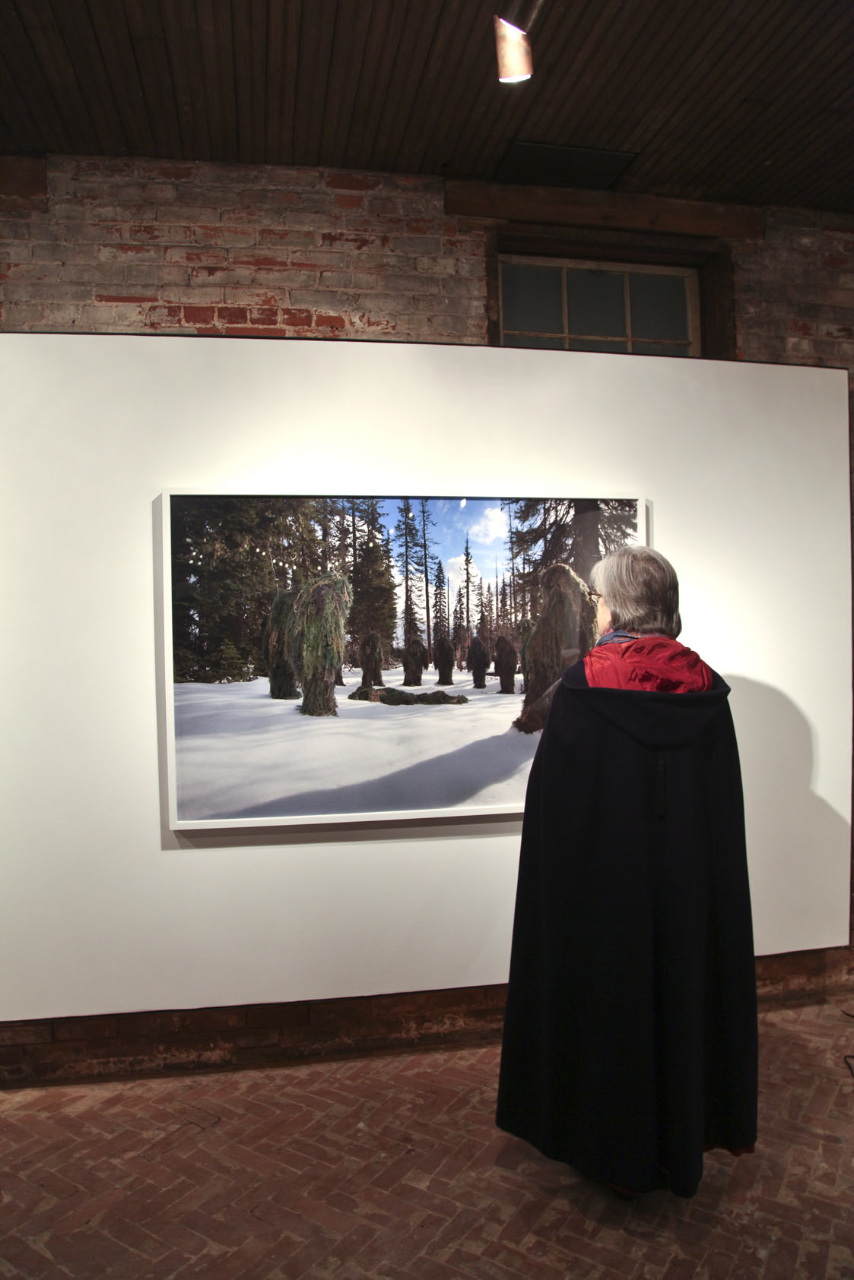
Wendy Given’s exhibition, Turn Your Back to the Forest, Your Front to Me, opened to rave reviews in January despite the icy weather.  We had a packed house and a great time.  In case you could not make it for the opening reception, we have included some images from the event below.  There is still time to see the show, but Given’s exhibition is only up for two more weeks.  The last day is Saturday, February 26.
Both Burnaway and ArtsCriticATL posted glowing reviews of Given’s works, which explain why this exhibition is a must-see!

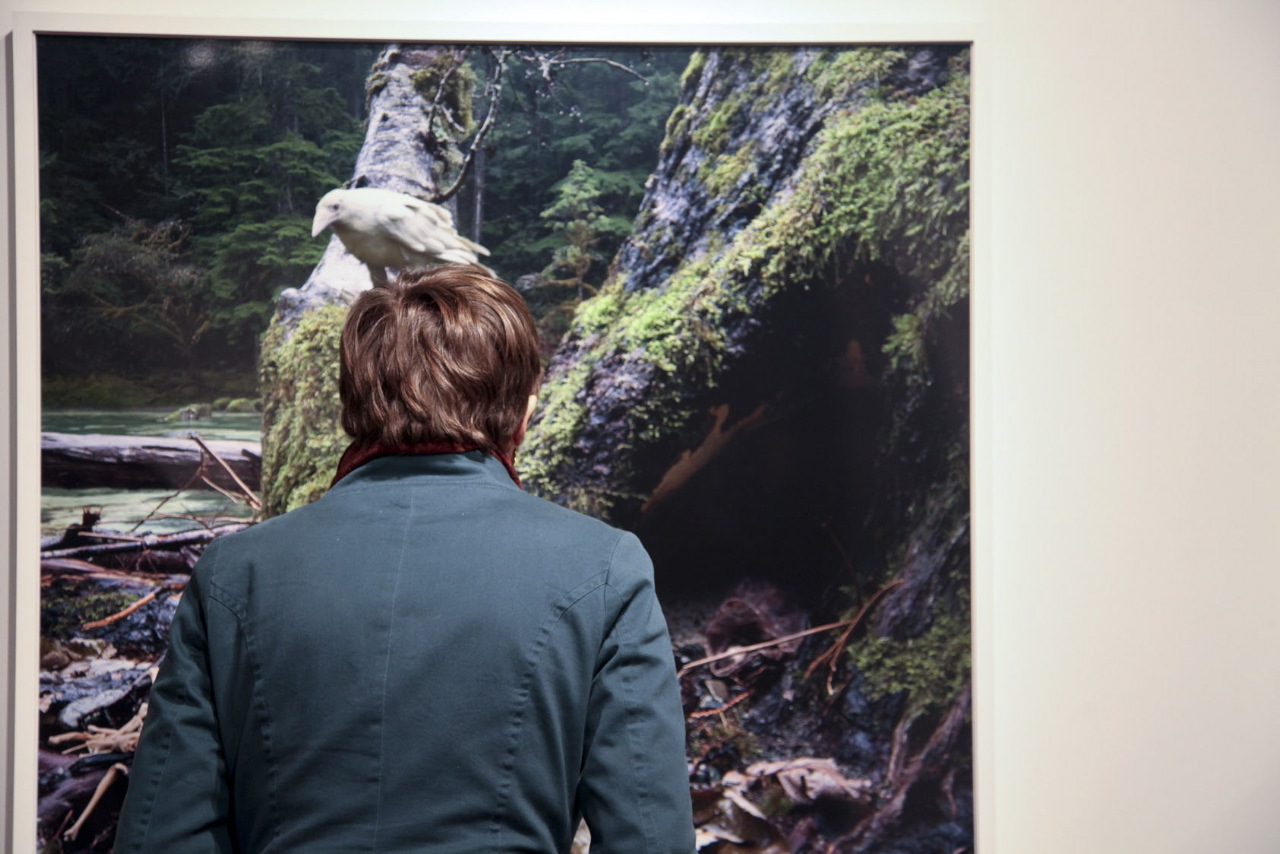
Gallery visitor takes a closer peek at the sleeping sparrow in Given’s, “Cubiculum”.

Wendy Given’s photograph, “Wake,” has caught the attention of a visitor.

A whitespace intern and “Of Augur and Auspice: No.5 (From Under the Pillow)”.

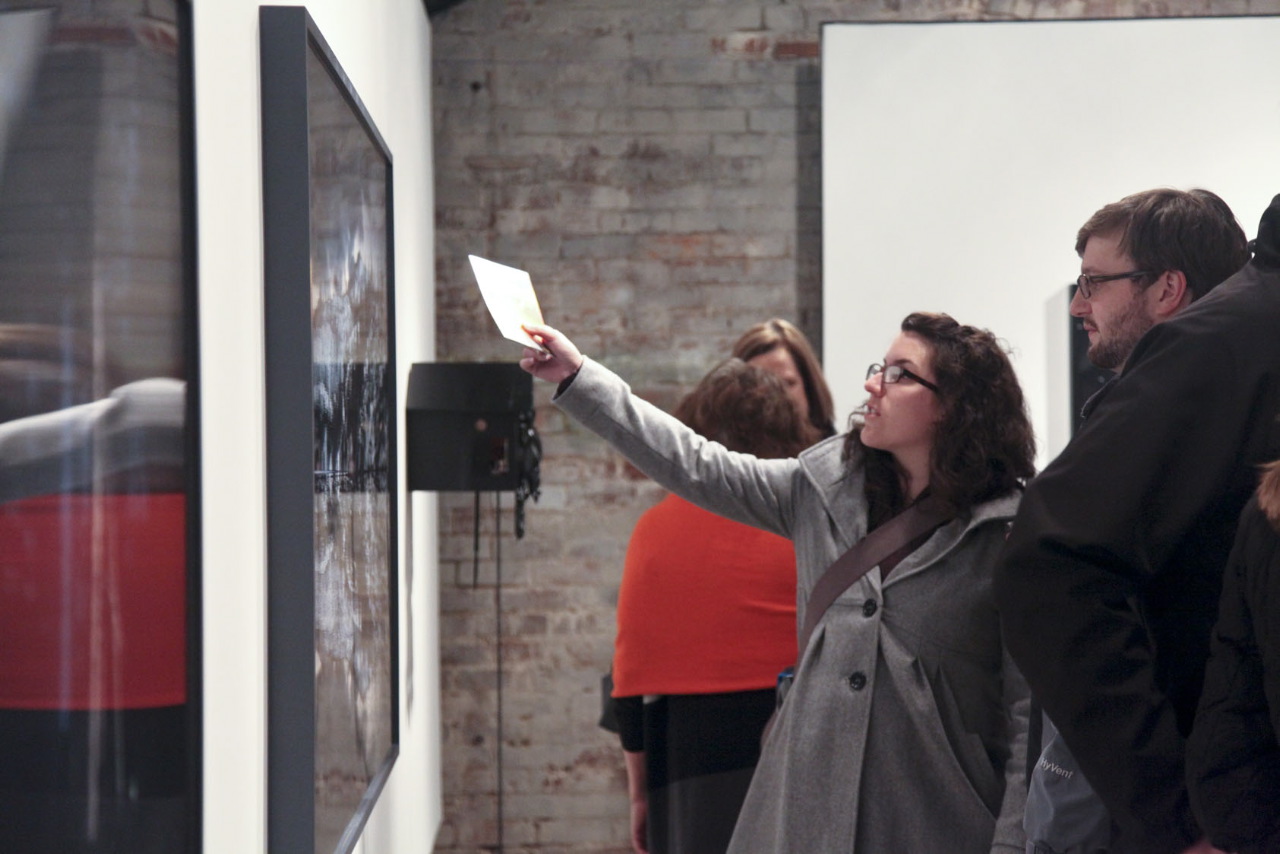
Gallery visitors discuss the composition of “By the Boat of Charon”